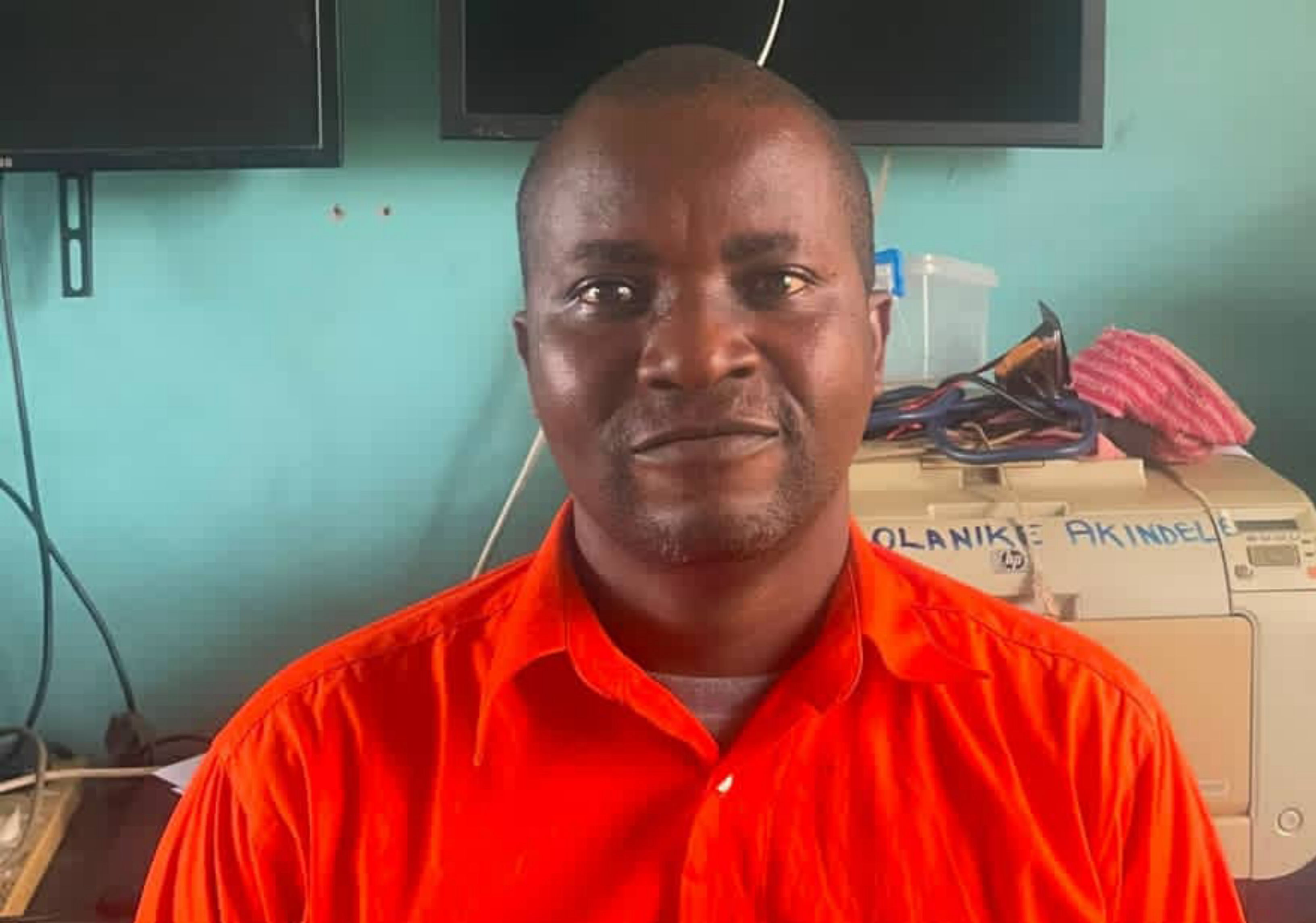
Interview with the Director of Entrepreneurship, FCA Ibadan
The Director of Entrepreneurship, FCA Ibadan, Dr. Oluwaleke Daniel Akindele, highlights the Directorate’s role in promoting innovation, practical skills acquisition, and entrepreneurial development. He shares insights into programmes and plans to prepare graduates for self-reliance and job creation.
By Adedokun Ayodeji
In an exclusive interview with the Public Relations Unit of the Federal College of Agriculture, Moor Plantation, Ibadan (FCAIB), the Director of Entrepreneurship gave an insight into the Directorate's role in promoting innovation, practical skills acquisition and entrepreneurial development among students. The discussion highlights the Directorate's programmes, collaborations, achievements and strategic plans aimed at preparing graduates to become successful entrepreneurs and job creators in today's economy.
Sir, can you kindly introduce yourself and your educational background?
I am Dr. Oluwaleke Daniel Akindele. I obtained my Bachelor's, Master's, and Doctoral degrees from the University of Ibadan. I am a sociologist with research interests in gender studies, rural development and rural infrastructure. Over the years, my academic and professional engagements have focused on addressing social and developmental issues, particularly those affecting rural communities and vulnerable populations.
What is the vision of the Entrepreneurship Centre, and how does it contribute to the institution's overall mission?
The concept of entrepreneurship has gained global relevance over the years, particularly as governments in many developing countries have struggled to provide adequate employment opportunities for the growing youth population. Given this reality, there is an increasing need to shift from the traditional mindset of being job seekers to becoming job creators. In line with this global vision, the Federal College of Agriculture, Ibadan, has positioned itself as an active participant in the entrepreneurial ecosystem. The Entrepreneurship Unit of the College is mandated to foster an entrepreneurial mindset among students, provide practical skills training, promote innovation and creativity and support business development initiatives. These objectives are closely aligned with the College's broader vision of producing self-reliant graduates who can contribute meaningfully to economic growth and national development.
How does the entrepreneurship programme prepare students to become job creators rather than job seekers?
The entrepreneurship programme is structured into two major components. During the first semester, students are exposed to the fundamentals of their chosen vocational skills, such as barbing, tailoring, bead-making, bookbinding and other trades. To ensure effective practical learning, experienced professionals and established business owners are invited to facilitate hands-on training sessions every Wednesday from 4:00 p.m. to 6:00 p.m. throughout the semester, which spans approximately 14 weeks.
In the second semester, the focus shifts to the managerial and entrepreneurial aspects of business. Students are taught essential business management skills, including enterprise development, business planning, and the principles required to successfully establish and sustain a business.
As an agriculture-based institution, the College is committed to integrating entrepreneurship with agriculture. While the agricultural component focuses on production and technical expertise, the entrepreneurial component emphasises business management, value addition and enterprise development. This approach is aimed at equipping students with the knowledge, skills and mindset required for self-reliance, innovation and job creation, rather than relying solely on paid employment after graduation.
What are the most common challenges students face when starting a business, and how does the Centre help them address these challenges?
The most common challenge is finance. Mindset is another major challenge. I have just completed six months in this office, and one of my priorities has been to introduce partnerships with agricultural cooperative banks to support our students. However, the challenge is that most of these financial institutions provide loans only to serving corps members or graduates who have completed their programmes.
In the meantime, we encourage students to cultivate a savings culture so they can gradually build the capital needed to start their businesses. At present, the College is not in a position to provide direct financial support. Therefore, the first step towards overcoming these challenges is changing the mindset. Once students develop the right entrepreneurial mindset, accessing finance becomes less of a barrier because they become more resourceful and prepared.
Can you share some notable success stories of students or graduates who have benefited from the entrepreneurship programme?
Yes, certainly. We have several success stories that demonstrate the impact of entrepreneurship education. For instance, there is an alumnus of the Department of Home and Rural Economics who graduated from this College and now owns a thriving bread-making factory in Ojoo, Oyo State. I recently invited him back to the College, and he has graciously agreed to assist us in rebranding and reorganising our bread-making enterprise. He is one of the graduates I am particularly proud of. After completing his National Diploma programme at the College, he proceeded to the University of Ibadan to earn a university degree. Today, rather than relying solely on his academic qualifications for salaried employment, he has built a successful career as an entrepreneur and proudly runs his own bread-making business.
We also have two National Diploma students whom I encouraged to switch to the part-time programme due to financial challenges. Today, they own successful tailoring businesses and have become entrepreneurs in their own right. They regularly return to the College to assist in training our students during the practical sessions of the entrepreneurship programme. However, one challenge that still exists is that many young people continue to embrace the "get-rich-quick" mentality instead of committing themselves to developing sustainable entrepreneurial skills.
What plans does the Directorate have to further strengthen entrepreneurship education in the College?
We combine both the theoretical and practical components of entrepreneurship education. Students are encouraged to commercialise the practical skills they acquire. During the Harmattan Semester, experienced trainers from within and outside the College were engaged to provide practical vocational and entrepreneurial skills training. We have achieved a great deal in this regard. Looking ahead, we are planning a comprehensive long-vacation entrepreneurship training programme, which has already received the approval of the Provost. Beyond our traditional areas such as bread making, we intend to invite experts in cybersecurity, Information Technology (IT) and other emerging technologies relevant to the modern digital economy. Our goal is to expose students to contemporary, high-demand skills that will enable them to compete effectively in today's rapidly evolving world, to become self-reliant.
What advice would you give to young people who are interested in entrepreneurship but are afraid of the risks involved?
Entrepreneurship is no longer optional; it is increasingly becoming a necessity. Anyone who desires financial stability and long-term success must cultivate an entrepreneurial mindset. I constantly encourage my daughter, who is in her final year in secondary school and already skilled in sewing and hairdressing, to also acquire knowledge in cybersecurity or another ICT-related field. I give the same advice to my sons, who will soon be old enough to learn vocational skills such as barbing.
One of my greatest regrets is that I focused almost exclusively on obtaining my first, second, and third degrees without paying equal attention to developing practical entrepreneurial skills. My advice to young people is simple: develop a skill that people need and are willing to pay for. By combining education with practical skills and an entrepreneurial mindset, you can build a rewarding career, create wealth, and avoid financial hardship.
FCAIB, The First, The Best!